


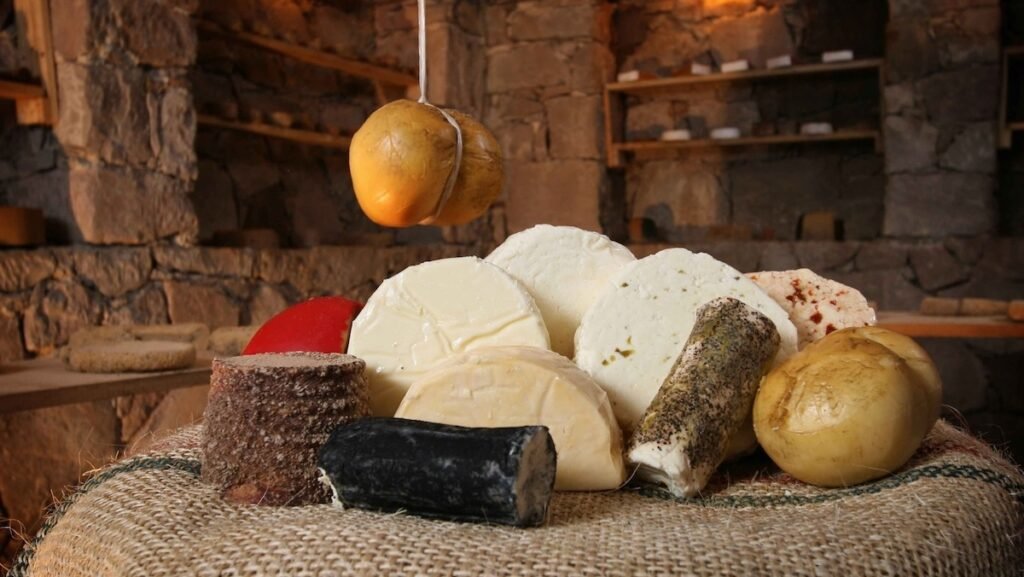
Querétaro’s wine country gets most of the attention, but the same rolling countryside around Tequisquiapan and Bernal is also home to a serious artisanal cheese tradition. The Ruta del Queso, often paired with the wine route as the “Ruta del Queso y el Vino,” connects a handful of working dairy farms producing everything from traditional Mexican panela to French-style reblochon and chabichou, made with milk from their own sheep, goats, and cattle. Here is what is actually on the route and how to plan a visit from Zibatá.
Tequisquiapan: The Route’s Anchor Town
Tequisquiapan, a Pueblo Mágico about an hour from Zibatá, functions as the geographic and logistical center of the cheese route. Its market stalls and specialty shops sell products from the surrounding ranches, and its central location makes it the natural base for a day trip that includes two or three farm visits.
Four Farms Worth Building a Trip Around
Quesos Vai, at kilometer 30 between Tequisquiapan and Querétaro, runs daily guided tours from 10:00 a.m. to 6:00 p.m. with artisanal cheesemaking demonstrations and tastings, making it the easiest stop to fit into a spontaneous itinerary since it does not require advance reservations.
Rancho Santa Marina sits northeast of the capital, reached via the Chichimequillas-Atongo road. It is a certified organic producer running more than 300 sheep across 40 hectares, and its European-style cheeses, think reblochon, Sainte-Maure, picodon, chabichou, and crottin, have built a reputation well beyond the state. Tours require a reservation.
Rancho La Hondonada, also known as Flor de Alfalfa, is located about 20 kilometers west of Bernal and milks a herd of more than 500 Jersey cattle. The operation runs on biodigesters that convert manure into electricity, an unusual detail for a farm this size and a good example of how seriously the region’s producers take sustainability.
Rancho La Serpentina, roughly 20 kilometers northeast of the capital along the bypass highway, is the smallest of the four, milking around 100 goats to produce about 500 kilograms of cheese weekly. It is the route’s most intimate stop for visitors who want to see a small-batch operation up close.
What You’ll Actually Taste
The route covers two distinct cheesemaking traditions side by side. On one end, familiar Mexican styles: Oaxaca, panela, and botanero, made for melting, snacking, and everyday cooking. On the other, European techniques transplanted directly to the Bajío’s high-altitude pastures: reblochon, Sainte-Maure, picodon, chabichou, and crottin, styles more commonly associated with French farmhouse dairies than central Mexico. Tasting both traditions back to back, often at the same farm, is what makes the route distinct from a typical cheese shop visit.
Planning the Visit
- Call or book ahead for Rancho Santa Marina, Rancho La Hondonada, and Rancho La Serpentina, since several operate by reservation only; Quesos Vai is the exception with daily walk-in tours.
- Bring a cooler. Cheese does not travel well in a hot car, and the farms are 30 to 45 minutes apart from each other.
- Pair the day with the Ruta del Vino; several wineries around Ezequiel Montes are a short drive from the cheese farms, and many visitors combine the two into a single weekend.
- Add a stop in Tequisquiapan itself for its hot springs, artisan market, and the town’s own restaurants, most of which feature the local cheese on their menus.
Sources: México Desconocido: La Ruta del Queso en Querétaro | México Desconocido: Ruta del Queso y el Vino
Read more: Tequisquiapan: A Weekend Escape | Our 2025 Top 5 Wineries in Querétaro
